Browse our Informative articles

Archives

Slaughter Beach Historical Society Presents

HSC

News & History

Our articles are more than just history; they’re windows into the heart and soul of this town. Join us as we journey through time, exploring hidden gems, reliving moments of nostalgia, and connecting with the personal narratives that make Slaughter Beach so special.

DEL 250 Series: Slaughter Beach Tricentenary (1681-1981)

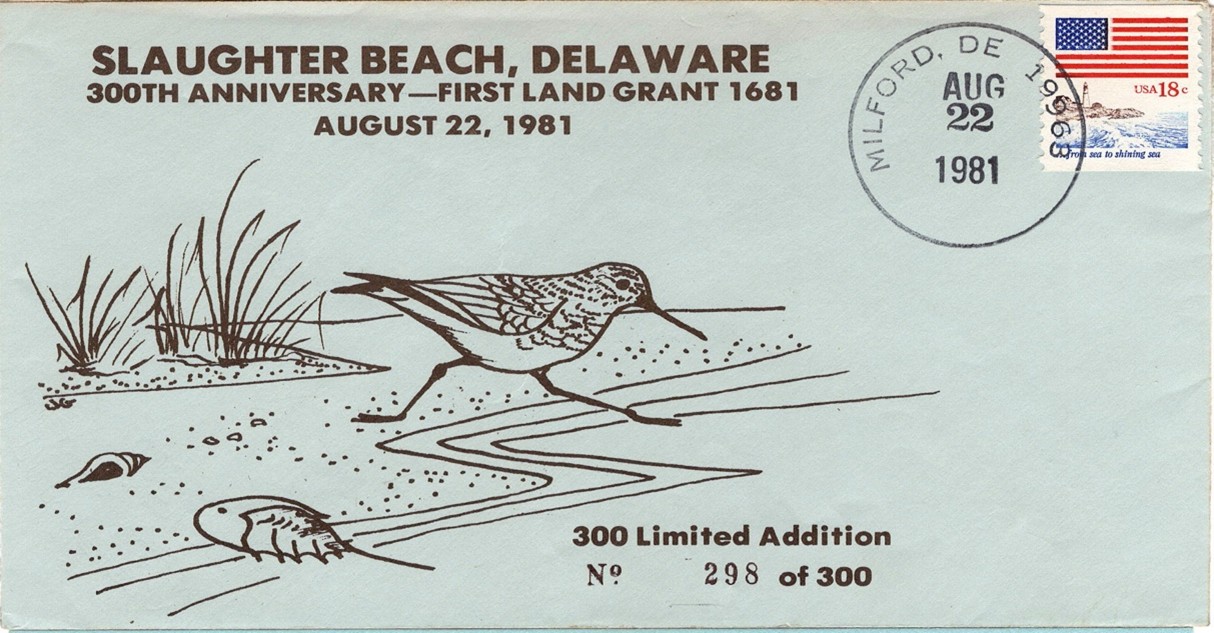
Summary by Jackson Gingrich The date of 1681 is recorded as the first and oldest settlement in the area of Cedar Creek Hundred that was to become Slaughter Beach. Alexander Draper (1630-1691) was granted 1000 acres in 1681, and it became the oldest settled grant and was called “Little Bolton”. This parcel was situated along what is now Slaughter Beach Road starting around what is now Wells Road and moving eastward toward the Delaware Bay. The Slaughter Beach Tricentenary was surely a huge even event, judging by its scheduled activities, which extended from early morning through midnight on August 22, 1981, and again on the early morning of August 23rd. The August 22nd events: A first day cover was issued

Read More »

DEL 250 Series: The Town of Slaughter Beach Incorporated, 1931

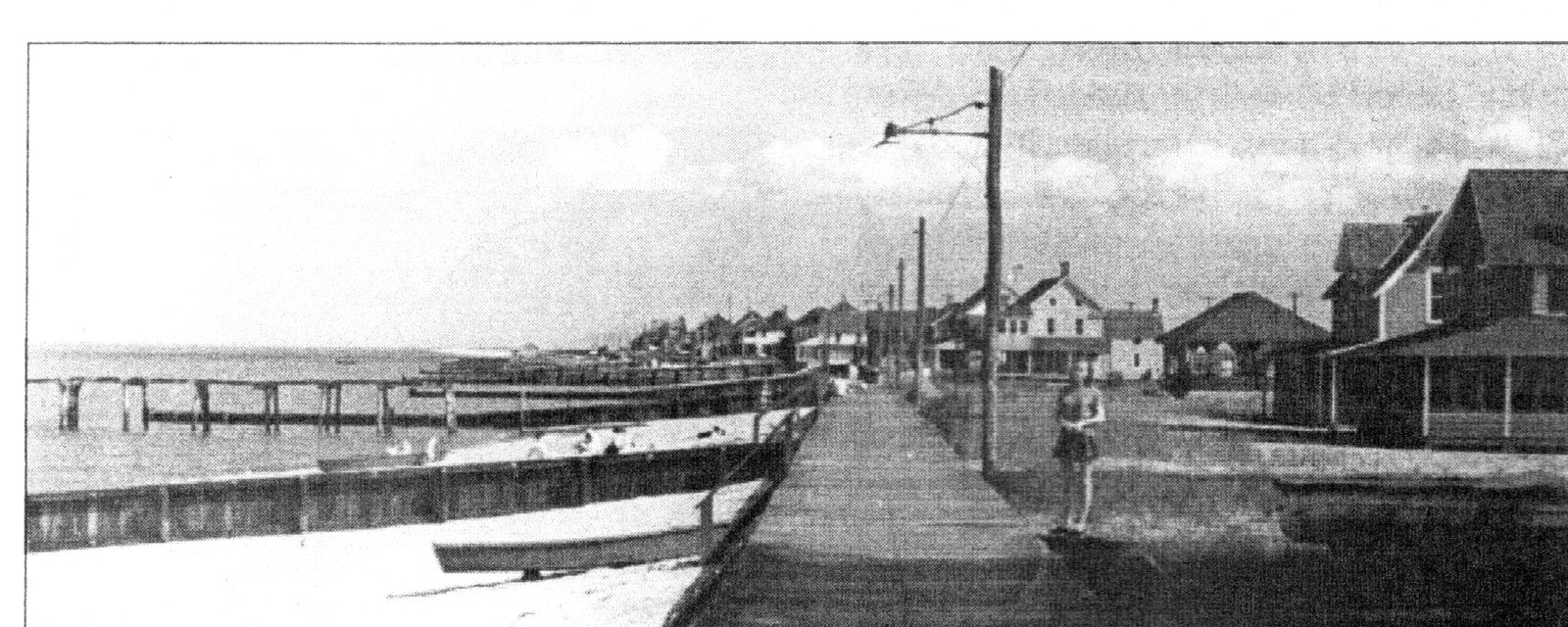
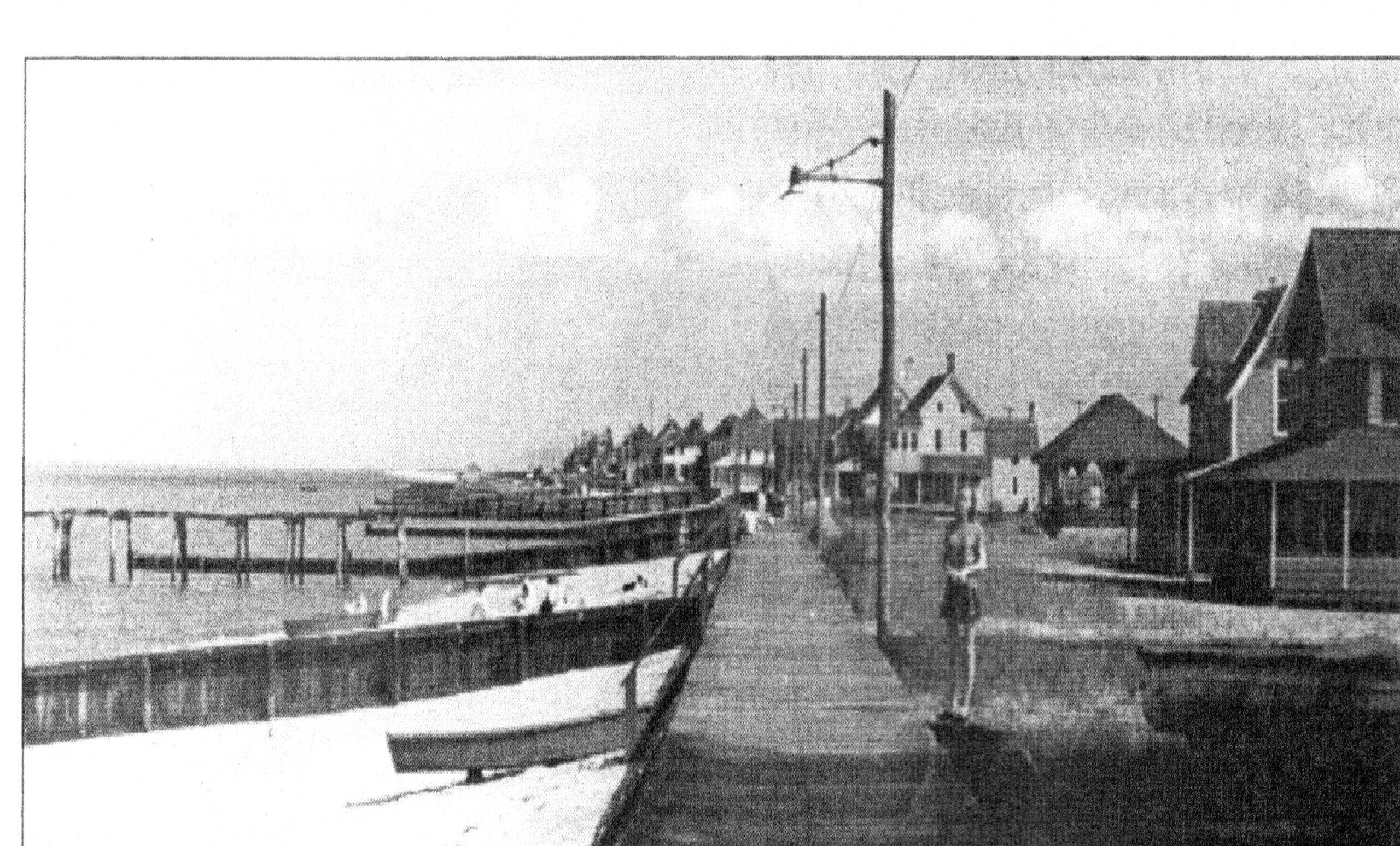
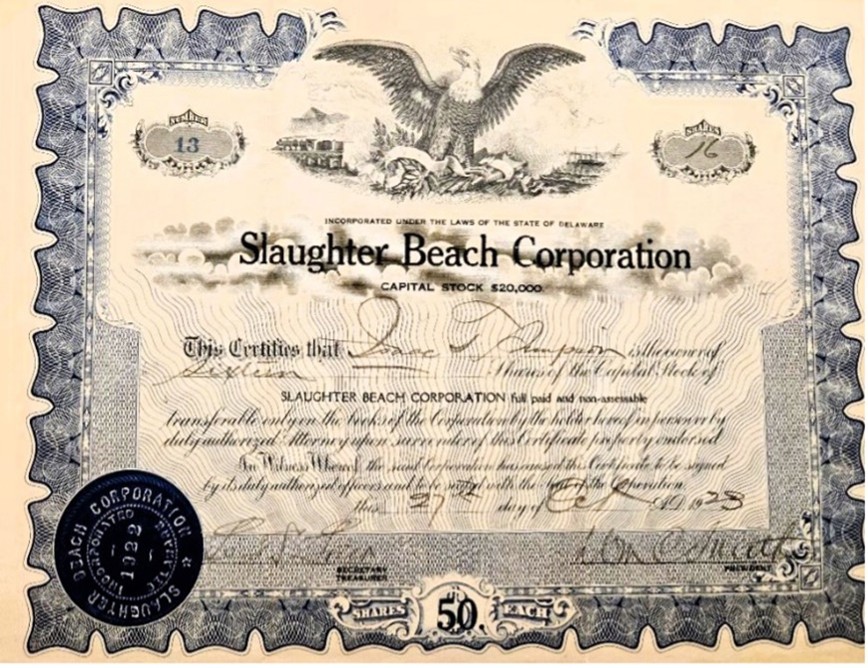
The Slaughter Beach Corporation was the basis of moving toward forming and incorporating the town of Slaughter Beach. The Slaughter Beach Corporation was formed to provide some infrastructure to make the area more attractive to visitors and others as a resort area. The corporation of 1922 provided for the renovation and improvement of the hotel, including garaged and stables. A large dance hall was being rebuilt and remodeled, and an “orchestra is engaged for the summer”. It also provided that a six-foot-wide boardwalk that extended along the shore and included a pavilion. In February 1931, a meeting of the property owners and the members of the boardwalk community was held in the dance hall to consider incorporating. A draft charter

Read More »

DEL 250 Series: The Revolutionary War: Official Dates April, 19, 1775 to September 3, 1783

The Beginning: While there were several small skirmishes prior to April 19, 1775, this date is recognized as the accepted beginning of the war due to the first major military actions between the British Army and patriot militias at Lexington and Concord. The End: The conflict began to die down with the defeat of Cornwallis by a Franco-American army in Yorktown, Virginia, in September and October 1781. Great Britain acknowledged the sovereignty and independence of the United States with the Treaty of Paris, ratified on September 3, 1783, and brought the American Revolutionary War to an end. In between, battles and skirmishes took place in all of the thirteen original colonies. As the map to the left shows, the majority

Read More »

DEL 250 Series: Cedar Creek Hundred in the Revolutionary War

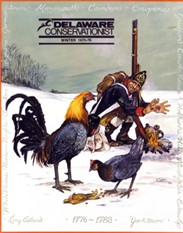
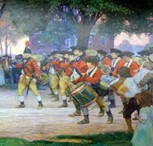
There are several residents from Cedar Creek Hundred with ties to the Slaughter Beach area that served in the Revolutionary War. Brian Hunt’s website, forgottenpatriots.org, has researched and documented muster rolls, pensioner records, and other resources to document notable residents of Cedar Creek Hundred and how they contributed to the effort of the Revolutionary War. The Slaughter Beach Historical Society has documented a few of the contributors to the war effort from our area. John Vinyard (1760 -1818) was from a long-time Milford family. He was a fifer/drummer in the 1st Delaware Regiment, The Blue Hens. The Delaware archives reflect his military service fighting in the Long Island campaign and later at White Plains when Washington retreated north from New

Read More »

DEL 250 Series: The Black Camp Rebellion in Cedar Creek Hundred

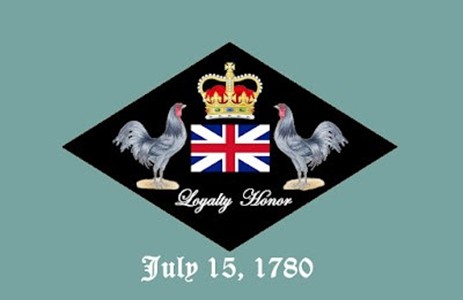
The Black Camp Rebellion began July 15, 1780 during the Revolutionary War. The American colonies were bitterly divided, and the colony of Delaware was no different. There was a group of Sussex County farmers who didn’t particularly care about who ruled them, but they minded the disruption of selling their goods to market, primarily in Philadelphia. Many of the farmers were destitute and resented the high taxes placed upon them. Initially, they met up to vent their frustrations, but as their discussions continued a plan was hatched to secure Sussex County for the British. Bartholomew Baynum was a prominent leader in the insurrection, mobilizing other farmers from the Cedar Creek Hundred, located near Slaughter Beach. The Cedar Creek group joined

Read More »

DEL 250 Series: Slaughter Beach Incorporated 1922

While Slaughter Beach history dates back to the 1600’s, it was not until 1931 that the area became incorporated as a town. In the late 1800s and early 1900s Slaughter Beach was a popular destination for local townsfolk to relax and enjoy the beach, fish, and natural surrounding beauty. Several prominent families bought tracts of land and built summer cottages for family enjoyment. Later, individual lots were sold. The family-like environment they created was often at odds with the activities engaged in by some of the locals. Recall that Prohibition was the law with the 18th Amendment, and it appears that Slaughter Beach may have been involved in liquor running. Contrary to some thinking that the Delaware did not engage

Read More »

DEL 250 Series: Thorn Point Hotel – Cedar Beach

Prior to 1775, the property was originally part of Hart’s lands, an early land grant. Sometime after the Revolutionary War (1776-1783) a tavern and hotel were built at “Thorn Point”, near the original Cedar Creek Outlet and the Mispillion Harbor. It became a local landmark for vessels trading along the Delaware Bay coastline. It was noted on Beer’s 1868 Atlas as a landmark, circled in purple below. The hotel was also part of an Orphan’s Court map in 1883 to define the surrounding area. It is noted that the Thorn Point tract is 9 acres, and includes the following description: “Stone in the road. Beginning of deed for Thorn Point and said herein to be corner for Bald Eagle.” The area

Read More »

Del 250 Series: Earliest History & Settlers

The first settlement in the Lower Delaware Colonies was at Lewes in 1631 and is called the “First Town in the First State. Cedar Creek Hundred was located between Cedar Creek and Slaughter Creek and was formed in 1664 when English rule prevailed over earlier Dutch and Swedish settlements at New Castle and Wilmington. The counties of Delaware were originally divided into Hundreds based on the English use of dividing up counties. October 25, 1682, William Penn directed that Delaware be divided into hundreds for the purposes of taxation. A “hundred” is an old English Saxon land division which is smaller than a one hundred families. county or shire and larger than a tithing. It comprised ten tithings of ten

Read More »

Del 250 Series: 1772: Campbell’s Road and Beach: How the Road to Slaughter Beach Came to Be.

In probably the mid 1700s to early 1800s, this early road may have extended from Cedar Creek Village, located at the crossroads of what is now Route 30/Cedar Creek Road and Pine Haven Road.  This was a once thriving village on the King’s Highway and Cedar Creek, transporting goods from as early as the 1760s to mid- 1800s. Milling and transport of shipments of grain and lumber were important industries prior to 1769. Campbell’s Road would have traveled eastward toward Delaware Bay, going through another crossroad and small village at Argo’s Corner until it ended at the Bay, or the currently named Bay Avenue. Prior to 1858, in earliest references to the area, this road to the Bay was called

Read More »

Del 250 Series: 1764 Wyncoops Orchard: First Known Commercial Orchard in Slaughter Beach.

 The 1764 plot plan below of Wyncoops Farm (purchased in 1730) shows that farming close to the beach existed in the early 1700s, and is evidence that more than hunting and fishing was happening in the Slaughter Beach area prior to pre-Revolutionary War times. Benjamin Wyncoop was a large landowner in this area; his parents and grandparents originally having emigrated from the Nederlands (Netherlands today) in the 1600s to “New Nederland” which is now New York State. This orchard would have needed to be accessed from inland by a rustic version of the early (prior to 1758) “road to Campbell’s Beach”, now Slaughter Beach Rd, necessary by development of farms in that area.   Or considering its proximity to the Old

Read More »

Rum Running on the Delaware Bay circa 1930s

While many visitors enjoy sitting on our beaches with a nice cocktail in hand, nearly a century ago our coastline was a haven for a different kind of “rum runner”. On June 23, 1930, Coast Guardsmen discovered a partly submerged ship in the Delaware Bay, just south of the Mispillion Harbor, that appeared a little fishy… Upon further inspection, authorities found that the craft, the “Daisy T.,” was smuggling over 100 cases of liquor valued at over $10,000! Authorities believed that the ship was headed to a secret port on the Mispillion River to unload the alcohol when it was intercepted by a pirate vessel that rammed into its side. Whether the crew of the Daisy T. were murdered, as

Read More »
Mispillion Lighthouse

Lighting the Mispillion Lighthouse

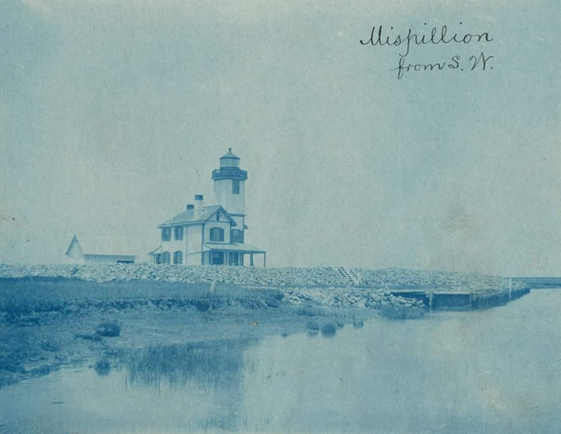
Let’s rewind back 151 years to a remarkable event that took place right here in the Mispillion Harbor on June 27, 1873 – the lighting of the Mispillion Lighthouse! Before that day, mariners were without a light to guide their path near the mouth of the Mispillion for the previous 13 years. After years of complaints, Congress finally approved $5,000 for a new light to be constructed, which would serve as the third lighthouse to be built at the Mispillion Harbor.  The first, original lighthouse, was constructed in 1831, and then rebuilt in 1839 after inspections revealed it was in great disrepair. The second light was built some years later but torn down in 1859 after a report to congress

Read More »

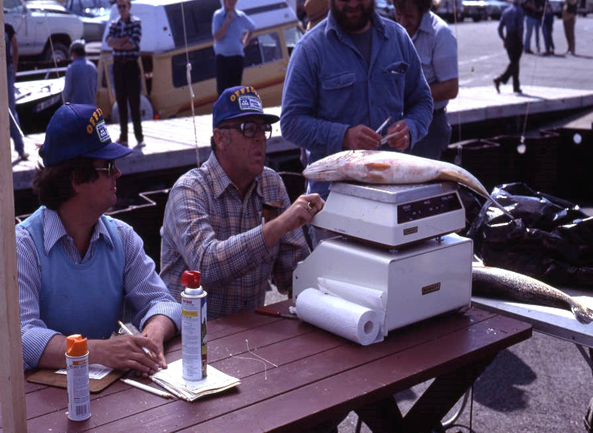
The Mispillion Harbor Annual World Weakfish Tournament 1979-1991

Researched and compiled by Diane McFaul Hindman, Slaughter Beach Historical Society, with thanks to multiple sources, including a 2021 interview with Judy Diogo, Milford Chamber of Commerce, Delaware State News articles from 1979, 1980 and 1991, and a recent 2024 interview with Eric Burnley, Cape Gazette and WGMD. According to Fred Bonner, reporter for the Delaware State News on Mar. 11, 1979, there were “crowds of fisherman flocking here to fish during the spring run, who said how good the fishing was in the Delaware Bay. Sea Trout were abundant and astounded even the Old Timers by their size! So, the Milford Chamber of Commerce decided to sponsor the first World Championship Weakfish Tournament and bring national attention to Slaughter

Read More »
Artifacts

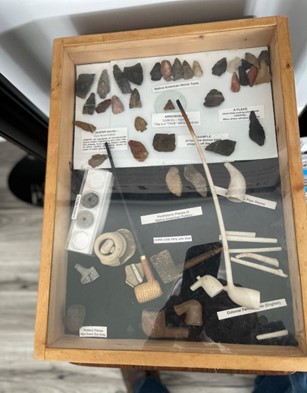
The American Indians Of Delaware

By Jackson B. Gingrich EARLY AMERICAN INDIANS, as many prefer to be called, originated from northeast Asia. It is probable that a number of tribes, including the Lenape or their ancestors, crossed the Bering Strait from northern Asia during the warming period of the last Ice Age, which we estimate as ~12,000-15,000 before present (BP). Prior to that, the land bridge, though extensive and wide, was deeply frozen and provided only short shrubs and small mammals for sustenance, so crossing would have been nearly impossible. A broad swath of Algonquian-speaking tribes was conjoined in the northwest U.S. in what is today Washington, Oregon, and Canada about 10,000 years BP.  Among this loose confederation were the Lenape-Nanticoke, Algonquin, Assateague, Wicomico, Accokeek, Iroquois,

Read More »

Travel Study: 1790

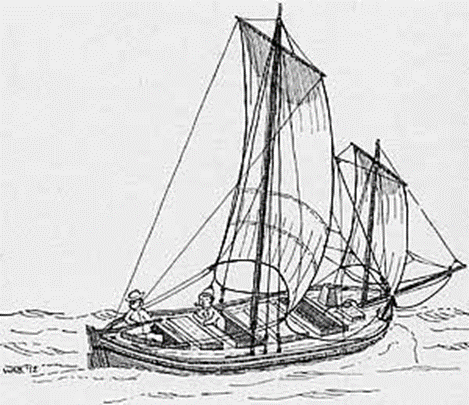
Learn some History and take a Field Trip! This is an interesting true history story that you can share with your families and visitors, and then take a 1-hour field trip.  Use this to encourage them to use their imaginations to think about life in this area over 200 years ago! Travel at the end of the 18th Century was sometimes strenuous, difficult, and often dangerous.  Harold B. Hancock noted many examples in his book Delaware 200 years ago (1780-1800) in the chapter “Travel by Land and Sea”.  Roads in Delaware’s Three Lower Counties were not well developed yet. A post-rider carrying mail in 1775 from Philadelphia to Lewes usually took 3 days over rough roads. In 1781, passengers on a

Read More »

Delaware Bay Launch Service celebrates 50 years!

Congratulations! The Delaware Bay Launch Service (DBLS), located at the end of Passwater Dr, is celebrating their 50th Anniversary 1973-2023. The residents of Slaughter Beach have watched and heard the powerful boats of the DBLS come and go out to the Bay many times every day.  Their fifty-year history of hard work and dedication providing service in all hours and all weather deserves to be celebrated. The Slaughter Beach Historical Society and the town of Slaughter Beach offers Congratulations on this special occasion to all the wonderful workers who have contributed. We wish you many more years of safety and success. Part 1:  Launch Legacies: A Father/Son tradition Harry and Hick Rowland: Capt. Harry H Rowland was born in 1914,

Read More »

Slaughter Neck Methodist Church

by Linda Bennett White Located at the corner of Argos Corner Road and Church Road, the Slaughter Neck Methodist Church has a long history in the area. The seeds of the church formed in 1777 when a Methodist Society was formed at Cedar Creek Village in the home of William Shockley by a traveling Presbyterian minister. John Copper was the first Methodist to preach in the area and was followed by others who were spreading Methodism in Sussex County.  It was noted that Francis Asbury preached in Slaughter Neck July 13, 1776, and February 15, 1780, so there was not a regular minister assigned to the church until much later.  On July 26, 1810, a meeting was held, and trustees

Read More »

Davis Landing & Murphy’s Cannery

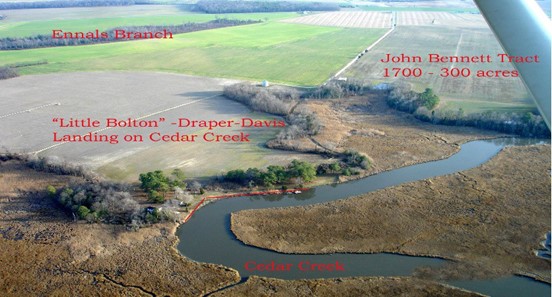
By Linda Bennett White Davis Landing is a small, 1.33 acre plot on Cedar Creek. It was originally part of Alexander Draper’s “Little Bolton” farm, which was acquired from a patent in 1677 by Governor Andros, in the name of the Duke of York, and consisted of 996 acres. This landing site for boats was used by 4 generations of the Draper family and was used as a wharf site as early as 1677. It stayed in the family until the death of Alexander S. Draper, when an Orphans Court petition divided his residual estate between his widow, Sarah; daughter Lydia S. Draper; and her three siblings. James B. Draper, William C. Draper, and Abigail. Lydia married Joseph B. Shepard

Read More »

What’s in a Name?

By Diane McFaul Hindman Everyone always wants to know the origin of the name Slaughter Beach. No one seems to know for sure. There are legends, anecdotes, and speculation about a Delaware Postmaster, Indian massacres, whaling events, and of course about the very large numbers of Horseshoe crabs that come ashore each spring. However, none of these stories have ever been verified. So, the Historical Committee would like to bring some sense into this discussion. The legend of an Indian massacre appears to have been initiated by John Lofland (1788-1849), who was known as the “Milford Bard”. He was a prolific writer of poetry, reportedly was addicted to Laudanum for most of his life. He is not known as a

Read More »

Meet Your Neighbors

The Slaughter Beach Historical Society (SBHS) is starting a new series of articles on local long-time residents and families. Watch this website for stories and memories from your neighbors, and you can enjoy learning about what it was like to live in and around our town in times past! 

Meet the Original Slaughter Beach Oracle

By Jackson Gingrich I first met Frank Draper shortly after I moved to Slaughter Beach in the Fall of 2009, when Frank was Mayor, and as a new citizen started attending the monthly Town meetings. It was clear to me from the start that Frank’s knowledge of Slaughter Beach included a wealth of family and Town history that few people knew. Frank had a gift of story-telling and on various occasions he shared many of them with me. When I was asked to be on the Town Council, I came to understand how Frank worked behind the scenes to promote the Town interests through his vast network of State and County officials. And I certainly heard many of Frank’s recollections

Read More »

The Rust Bay House

437 Bay Ave, Joy Rust Feulner and husband Terry.  Research and compilation done by Diane McFaul Hindman, SBHS, summer of 2021.   Many thanks to Joy and Terry Feulner, who met with me during the summer of 2021. They shared wonderful examples of life on Slaughter Beach (SB) near their Rust Bay House starting back in the late 1940s.   This included several interviews, and sharing of memorabilia and many photos, both original and digital to help us all walk in Joy’s shoes… or flip flops!    Joyce/Joy Rust was born in Milford in 1939 to Harry S. Rust and Alma Tease Rust who were married for 70 years! Their family made day trips to Slaughter Beach prior to buying the

Read More »

Alan Sitar Family 529 Bay Ave. and neighbors.

Researched and compiled by Diane McFaul Hindman, SBHS.  Many thanks to Alan and Katie Sitar who shared photos and paperwork during interviews during the summer of 2021. The Development of Cedar Beach Annex in 1960s: The Sitar family cottage is a good example of the beginning of development which began in the 1930s in the Cedar Beach annex on the north end of Slaughter Beach, north of Bridgham Ave.  By 1970, there was a paved road, and 79 lots had been laid out in the Cedar Beach area, but only 13 of them had houses on them.  The 1967 Sitar cottage was among the first.  Alan’s parents were Joe and Bette Sitar, who had 3 children Alan, Diane and Terry.

Read More »

The Esposito Family: 100 Years at Slaughter Beach

Researched and compiled by Diane McFaul Hindman, SBHS, including interviews, emails and pictures shared by both Curt and Mary Lyde Esposito. Curt Esposito and Mary Lyde Foster, 279 Bay Ave, both come from families with long military histories, including generations at West Point. Both have ancestors involved in many American wars: including Revolutionary, 1812, Civil, WWI and WWII, Viet Nam. The Esposito side had a fifer/drummer in the Delaware Regiment (the Blue Coats) during the Revolutionary War. And Mary Lyde continues the tradition of her interesting name that began during the Civil War when a Confederate soldier named Elias had the nickname of “Lyde”. After he was killed in action at the Rappahannock River, his new niece was named Lyde

Read More »

Slaughter Beach Tidbits


Welcome to our “Tidbits” section! Here, we share quick, captivating entries that highlight the charm of our community. Whether it’s a snapshot of a special moment, a brief historical tidbit, or a cherished family memory, we’d love to feature it. Simply use the Contact button on the site to send us your submission. It can be a local story, an interesting historical fact, or a personal anecdote—just a few sentences or a short paragraph will do. We’re happy to assist with editing and formatting to ensure it’s ready for the spotlight!

  • Visitors who came to Slaughter Beach to fish would rent boats from Mrs. [name missing] (across from Scorchy Hitchens’ one-gas-pump store) and simply drag them over the sand to head out with their 7- and 10-horsepower motors.
  • My brother Michael played guitar with the psychedelic rock group, the Blues Magoos, practicing in the garage during the 1960s with their tour bus parked in the driveway. Bill McSpadden was one of the local kids who used to listen in on the loud rehearsals.
  • Junior and Irene Hitchens were close friends of the Espositos for decades and really took care of Curt’s parents when they both became terminally ill in 1965. Junior, the fire chief emeritus, arranged for the Slaughter Beach ambulance to transport my dad to his final resting place at West Point Cemetery on June 10. He was so sadly joined by my mother on June 25, 1965, marking what would have been their 33rd wedding anniversary. They had been married at the Cadet Chapel on June 25, 1932.
  • I recall, as a child at Lot 10, the families always playing cards with the Berwicks, Fitzgeralds, and Swains from Lincoln—and, of course, swimming in the then much clearer bay with Norm Moore, Rem Barnard, Jack Willis, Ron Rust, and Tom Draper. We also played tennis on the court at Frank Draper’s, which is now the concrete parking area between Frank’s and what was then the Barnard cottage.
  • Once we moved to Lot 62, with the Barnards also next door, Mr. Barnard would always host poker games at his cottage on the weekends. Rem Barnard Sr., Mr. Newton, and my dad would sit in front of our cottage, having martinis on the benches—the boardwalk ran all the way in front to the end of the beach. I believe Fran Wells’ family owned the last cottage beyond the Newtons’.

Calendar Contest

Photos must be submitted between May 1st and Sept 1st. Winners will be announced in October. Please review contest rules below, before submitting photos.

Entries must be from residents of Slaughter Beach, homeowners or their visiting friends/family members.

  • All photos must be in digital, high-resolution format and taken in the town of Slaughter Beach.
  • Previously winning photos are not permitted.
  • Photos can be in color or black & white.
  • SBHS reserves the right to crop, revise, or publish photos.
  • Entries can be of architecture, nature, or animals. If people are included it is preferred they are non-identifiable; otherwise a general photo-release waiver must be signed and kept on file.
  • There is a limit of 3 photo submissions per person for consideration. Each entrant is limited to the possibility of one winning photo per calendar year.
  • Three anonymous judges will choose the winning entries.
  • Submissions will remain anonymous to the judges. Judges’ decisions are final.
  • SBHS retains only non-exclusive rights to the pictures submitted to SBHS for the purpose of entry into the calendar contest. Winning photos will include the photographer’s name.