
By Joanne Plescia
Part 1
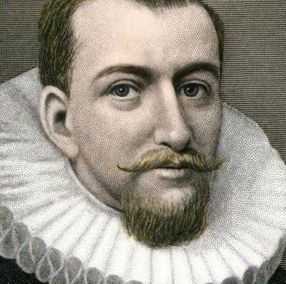
Henry Hudson explored the northeastern coast of the United States over 400 years ago. He made four journeys across the Atlantic from England, with the last exploration in 1610-1611. Some records suggest Hudson was born in circa 1570, which would have made him 40 years old on his last voyage. He was employed by the English Muscovy Company to search for a Northwest Passage, a predicted short cut to Asia. At the time of his explorations, most of Europe had little to no understanding of the geography of the Northeast, nor of the brutal conditions sailing in the arctic waters. Believing that the arctic would be ice free in the summer months due to the almost continuous sunshine 24 hours each day, Hudson attempted to sail his ship, the Hopewell, over the North Pole. Brutal weather conditions forced him to turn back. Still, he was the first European to have sailed that far north. The following year, Hudson attempted the trip again, this time along the Russian coast. Again, he failed but did not lose a single crew member.
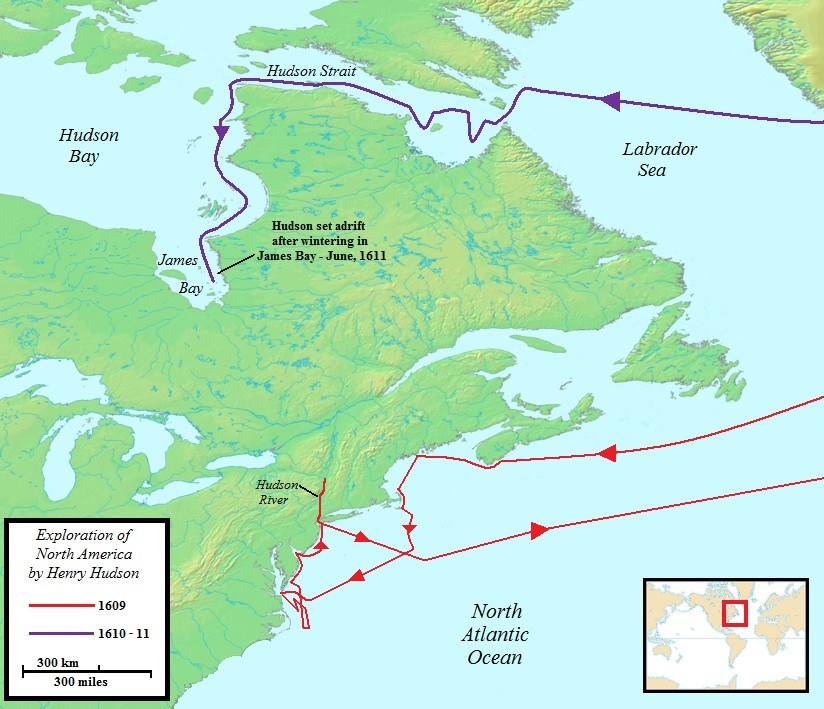
On August 28, 1609, Henry Hudson, sailing under the Dutch flag aboard the Halve Maen (Half Moon), entered and recorded Delaware Bay during his westward exploration of the New World.
Hudson, an experienced navigator originally commissioned by the Dutch East India Company to find a northwest passage to Asia, had redirected his mission after ice-blocked northern routes and instead sailed across the Atlantic to explore the North American coast.
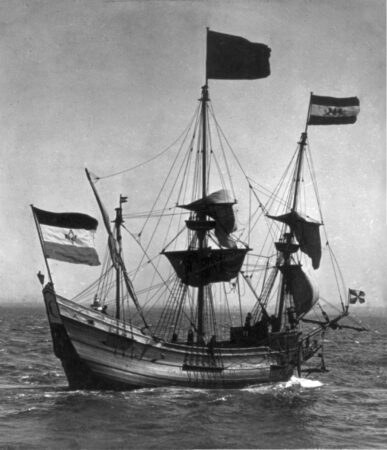
The Halve Maen, a small and maneuverable Dutch vessel suited for exploration, carried Hudson along shores he had already partially charted.
He reached Delaware Bay on August 28, 1609, which was the first documentation of the Bay. Although he did not explore the bay in depth, the Aug 28 entry was an important milestone that encouraged further European interest, exploration, and eventual settlement in the region.
In early September, 1609, Robert Juet described the Half Moon sailing along the New Jersey coast and entering what we now call Delaware Bay. On September 1, he recorded their latitude (about 39°3′), variable easterly and southerly winds, and deep water that gradually shallowed as they sailed north-northwest. On September 2, the weather was hazy, and the wind was from the south. As they steered north the depth of the Bay dropped quickly from about 21 fathoms (126 feet) to 12 fathoms (72 feet).
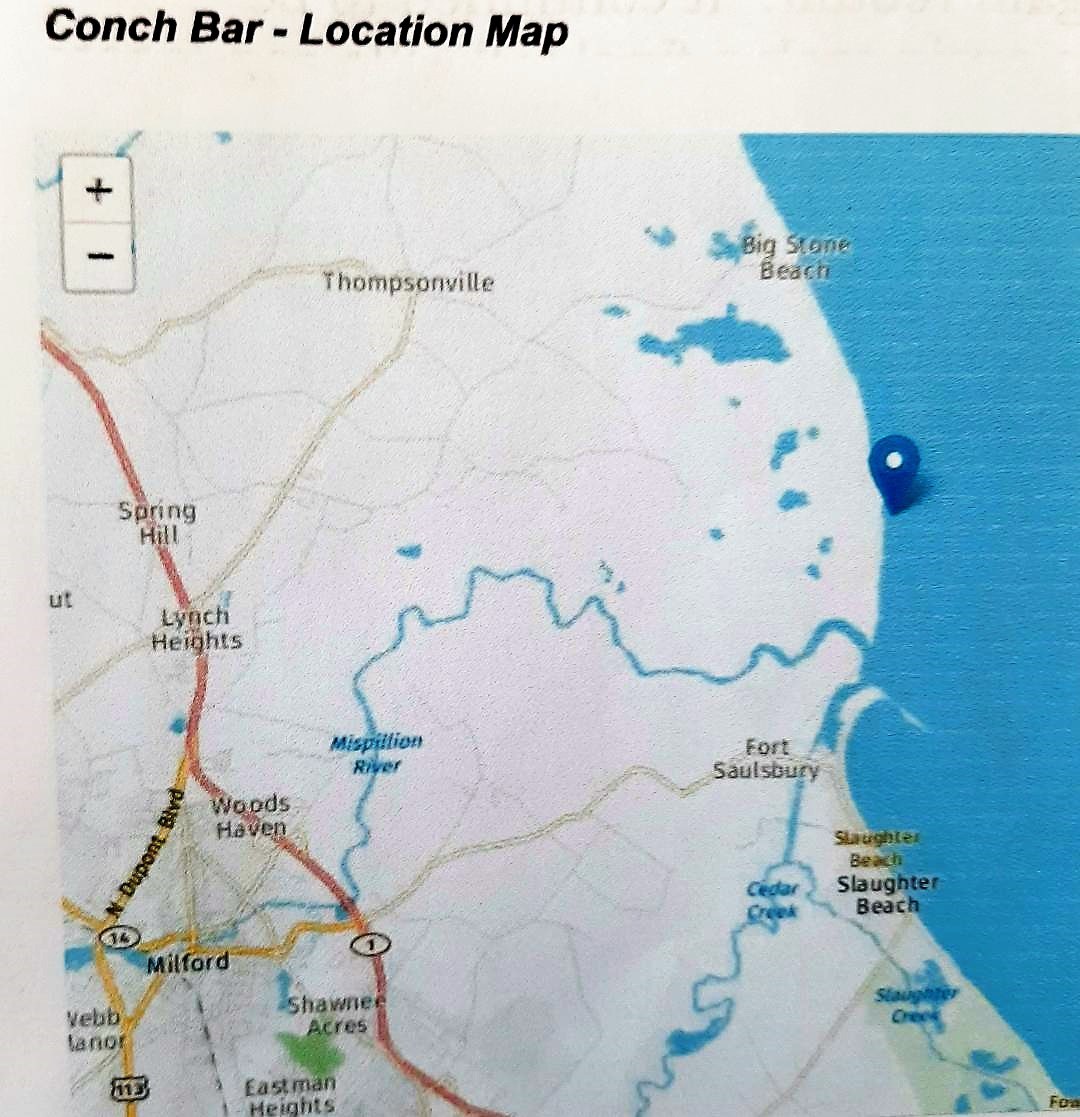
They saw a large fire on the shore before sunrise, then land that looked like a group of broken islands. Nearer to the shore the water was about seven fathoms (42 feet) deep. They followed the northeast coast until they came to a wide bay. Juet called it a “great lake” (The Delaware Bay), about ten leagues long with many shoals at its entrance and a strong current flowing out. They anchored at 5 p.m. in eight fathoms (48 feet). On September 3, they stayed at anchor, took on fresh water and local provisions (beef, pork, and some wine), then left and continued their voyage. According to local Milford historian, Dave Kenton, Hudson and his crew of 17 sailed in the Bay on August 28, 1609, and began taking depth soundings to determine if this bay and river could lead to a northwest passage. They anchored at the entrance to a pleasant creek, and Hudson called this spot “Paradise Point”. Most historians place this spot at the mouth of the Mispillion, very near to where our familiar Cedar Beach and Slaughter Beach came into being 200 years later! Due to erosion, it is thought that actual landing was about 400 feet out into the bay, near Conch Bar and the Greco canal. Map #2, below.
Hudson’s voyage while failing to uncover a passage to Asia, expanded European maps of the continent, strengthened Dutch claims, notably around the Hudson River that he explored shortly after Delaware Bay, and helped set the stage for subsequent Dutch and English colonization; development profoundly affected indigenous peoples and reshaped the geopolitical landscape of North America.
When he returned to England in 1609, the Dutch East India Company hired him to find a northwest passage in their ship, the Half Moon. He was not successful, but his voyage was embryonic for later Dutch colonization in parts of present-day New York, New Jersey, Delaware, and Connecticut. When he returned to England, a group of merchants hired him to again search for the Northeast Passage. After fighting through freezing weather Hudson arrived at the ‘Hudson Bay’ in northeast Canada, which connects the Atlantic Ocean to the Arctic Ocean. However, he and his crew could go no further due to winter conditions and waited there until the spring. While Hudson wanted to continue the search, his crew wanted to return home to England. It is not clear exactly what took place that led to a mutiny, but Hudson and a few crew members were abandoned in a small open boat on June 23, 1611, and left, never to be seen again. The rest of the crew returned to England to face investigations. Note the location on Map #1, indicating where he was marooned.
The above information gives a concise description of Hudson’s voyages. For those interested in more information, see Part 2 below for more details:
Part 2
Before we begin to feel badly about the crew’s mutiny, let’s think about the conditions they endured:
Ships like the Half Moon (Halve Maen, pictured above) and the Hopewell (pictured below) in Henry Hudson’s 1609-1610 voyages were small, robust early-17th-century merchant/exploration vessels built for the Dutch and English trades.
Key characteristics and typical contents:
Type, Size & Rig
- Hull form: shallow-draft, high-sterned “jacht”/small merchantman suitable for coastal and transoceanic work.
- Dimensions (Half Moon: ~70 Amsterdam feet long, ~16 ft wide ~8 ft depth)
- Masts and Rigging: three masts with a typical six-sail arrangement for the period.
- Tonnage holds ~30-100 tons; (Hudson’s voyage crew lists ~16-20).
Construction & Equipment
- Wooden built hull with substantial freeboard and a pronounced stern castle for berthing and defense.
- Basic navigation instruments of the time: compass, astrolabe/sea quadrant, log line, lead line, charts and pilot books, and ship logs.
- Small arms and ordnance: a few swivel guns and light cannons (e.g., small 3-6 lb guns) plus muskets, pikes, boarding tackles for defense and deterrence. (Hudson River Maritime Museum)
- Tools and small boats: ship’s longboat/launch & smaller rowing boats for shore parties; carpentry tools and anchors and anchor cables. (gothamhistory.com)
Life aboard & carrying capacity
- Limited below-deck space: crew slept in cramped bunks or on the deck
- The captain had a small cabin aft.
- Fitted to carry several months provisions for crew and any planned trading or exploration range, but vulnerable to spoilage and rationing on long voyages.
- Contemporary voyage journals (Robert Juet aboard Hudson) described exchanges, food, sounding depths, and small boat operations

| Category | Item / Quote (original wording simplified) | Context |
|---|---|---|
| Food & Drink | “We had aboard of us store of biscuit, beefe, and porke, and divers sorts of pease and beans.” (4 Oct 1609) Source: Robert Juet, Journal of Henry Hudson’s 1609 Voyage, in J.R. Brodhead, Documents Relative to the Colonial History of the State of New York, vol. 11 (1855) |
Principal ship provisions |
| Fresh water in casks; beer/ale (implied in provisions lists) Source: Juet journal; summarized in Edmund Bailey O’Callaghan, Documents Relative to the Colonial History of New York (reprints) |
Drinking supplies carried in casks | |
| Trade Goods | “We, having taken in some trifles, gave them knives, beads, and some copper.” (13 Sept 1609) Source: Robert Juet, Journal (as above) |
Exchanges with Indigenous people on first contacts |
| “They brought to us tobacco… and we gave them in exchange beads, knives, and copper.” (15 Sept 1609) Source: Robert Juet, Journal (as above) |
Trade for tobacco and victuals | |
| “We bartered with them for beaver-skins, for which we gave copper, knives, and other trifles.” (November, 1609) Source: Robert Juet, Journal (as above) |
Fur trading exchanges | |
| Ship Armament | “We put out our boat to sound, having with us a musket, powder and shot, and a pike.” (3 Oct 1609) Source: Robert Juet, Journal (as above) |
Arms taken on shore-sounding parties |
| “Our people had aboard small pieces of ordinance and calivers, and some muskets.” (18 Oct 1609) Source: Robert Juet, Journal (as above) |
Shipboard armament and small arms | |
| Navigation and Boats | “We tooke with us in the boat leads and line, and had with us a compass and divers charts; also we had an anker and cable ready.” (22 Oct 1609) Source: Robert Juet, Journal (as above) |
Small-boat equipment, navigation tools, anchors |
| Maintenance Stores | “We had aboard spare ropes, sail-cloth and wooden planks for repair, with tar and pitch for caulking.” (late voyage note; wording summarized) Source: Juet journal; corroborated by VOC ship records and secondary syntheses: J.R. Bruijn & L.C. van de Velde, VOC ship construction references (historical compilations) |
Ship repair and maintenance materials |
| Ship Particulars | Dimensions: Rigging: Halve Maen ~70 Amsterdam ft (~21 m), shallow-draft merchant/jacht; crew ~16-25; light swivel guns Source: Dutch East India Company (VOC) ship registers and maritime histories; summarized in Wim van de Velde and marine historians; cited in maritime histories of Hudson’s voyages (e.g., R. Shorto, The Island at the Center of the World, 2004; primary VOC registries) |
Ship type, size, rig, crew and light ordnance (reconstructed from VOC and period records) |
It should be noted that while Hudson did not find the Passage he sought, he is hailed in England as a great explorer whose diligent work on coastal mapping helped promote colonization up and down the Atlantic coastline.
References:
- Wikipedia.com
- ChatGPT (SBHS note: “Some content was created or assisted by artificial intelligence, and it may contain errors or require independent verification.”)
- Details.gothamhistory.com
- Hudson River Valley National Heritage
- National Library of Congress
- Dave Kenton 11/06, Diane Hindman, maps