
By Linda Bennett White
The Draper family has been a consistent influence in the history of the Slaughter Beach area. Starting with Alexander Draper (1630-1691), the family continued to have a great deal of input in shaping the history of what was to become Slaughter Beach. Alexander Draper received a “patent” or grant to 1000 acres in 1681, which was then determined to be the original founding of the area. He was not the first to be granted property in the area, but he was the first to receive property granted by Governor Edmund Andros of New York, and then settled in the area. This article attempts to highlight the contributions of the Draper family, but by no means can document everyone.
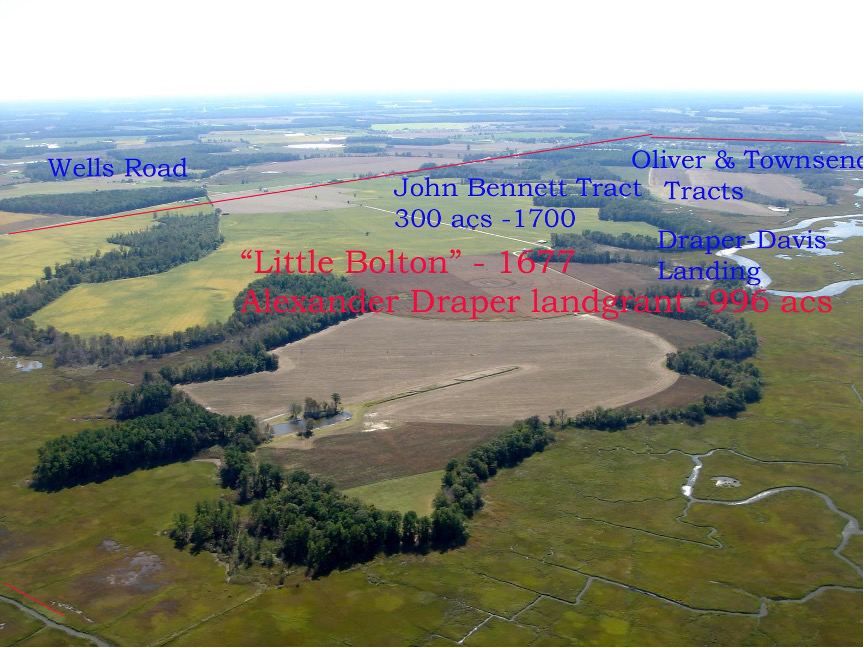
Alexander Draper: He was born in February, either 1629 or possibly 1630, in Bolton, England. Records show that he was a resident of Northampton County, Virginia, in April, 1658, at the age of 26, which may or not be correct based on his birth year. By January, 1662, Draper, and several other settlers moved out of Northampton County, specifically Hungar’s Parish, because they were termed “delinquent of dues” to the Church of England. This was a common cause of the migration of settlers to the Southern Delaware area. Records show that many from Northampton County moved to northwest to Annemessex in neighboring old Somerset County in the Colony of Maryland. Circa 1676, Alexander Draper started selling off his Maryland properties because that colony was now collecting taxes and dues for the Church of England. The migration to southern Delaware had begun. At that time, Sussex County was known as Deal County. Dave Kenton added some aerial maps for more details in his publication of “Early History of Slaughter Neck in Photos and Maps”. The first one notes the location of “Little Bolton” and Draper-Davis Landing. “This site along Cedar Creek was the spot selected by Alexander Draper in 1677 for his “Little Bolton” tract of 1,000 acres. The original land grant described 3.5 miles of frontage along the southeast side of Cedar Creek beginning at “Ennal’s Branch” and extending upstream to Rutt Road. This landing site was used by four generations of Draper’s descendants and later by the Davis family who traded farms and lands with the Draper families from the earliest period of settlement.”
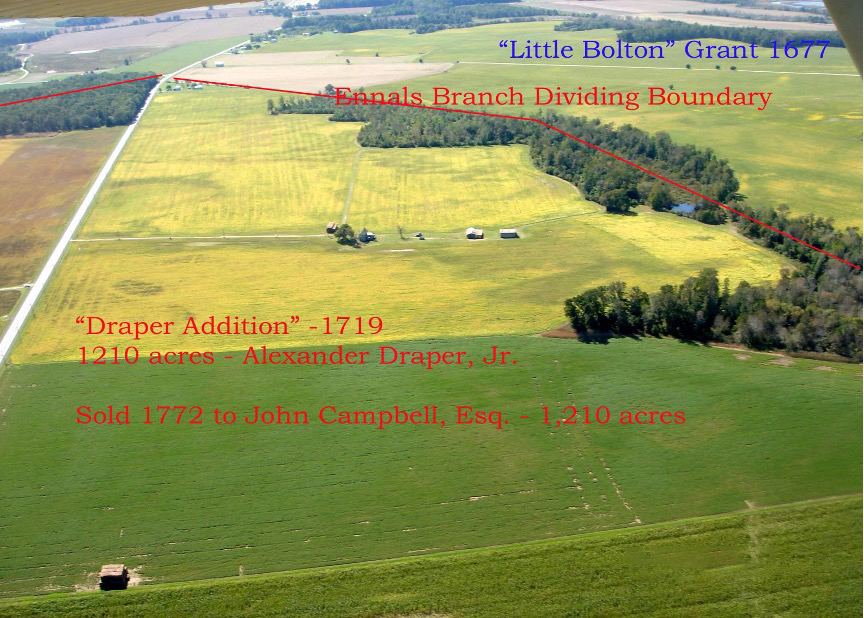
Ennal’s Branch: The photo below shows the division line between “Little Bolton,” and “Draper’s Addition.” Lands to the southwest in this aerial view were owned by Alexander Draper, Sr. and inherited by his son, Alexander Draper, Jr. in 1713. Alexander, Jr. filed for a new patent in 1719 for 1,210 acres that is shown to the east (left) of Ennal’s branch in this view. This 1,210 acre farm was purchased in 1772 by John Campbell, Esq., (1700-1778) of Worcester County, Maryland, and was inherited by his son, John Campbell, Jr. (1787-1858). John Campbell, Jr. died without a will, so this farm was split up by Orphans Court. The remainder of this farm, 452 acres, still known as the Campbell Farm, is owned by Bay View Estates LLC. The owners of Bay View Estates LLC are Everett, Linda (White) and Jay Bennett, who inherited this land through their great-grandfather, Charles E. Reed. At the time of his death in 1942, Charles E. Reed owned the majority of the lands originally granted to Alexander Draper.
Many generations of Drapers continued to live and contribute to the farming and development of the area. George Henry Draper, Sr. (1848-1933) was engaged in farming in 1870, served in the Levy Court for seven years, and in 1890 went into the canning and ice business with David Reis. When David Reis died in 1903, George Sr. went into business with David Hirsch, under the name of Draper and Hirsch, Inc. A few years later, George Sr. and his sons bought out Hirsch’s interest and continued the business as Draper and Company, Inc. The Draper canning business was active for many years after that. His son, George Henry Draper, Jr.(1889-1979) was still involved in the family farm and cannery, but expanded his efforts to developing the town of Slaughter Beach. In 1922, the name of George H. Draper, Jr. was recognized as one of the organizers of the Slaughter Beach Corporation. Local newspapers dated June 15, 1922, announced that “for the purpose of improving the resort and making it one of the most attractive in Delaware, the cottagers at Slaughter Beach have formed a corporation known as the Slaughter Beach Corporation, and work of rebuilding has already commenced” The incorporators were William C. Smith, Thomas Reed, Thomas Simpson, Jr., J. Pierce Simpson, George H. Draper Jr., and George S. Grier. They were all from Milford and owned properties in Slaughter Beach. Some improvements at the time were the remodeling of the hotel, with garages and stables added, A dance pavilion with accommodations for an orchestra, a boardwalk, and plans to add more infrastructure later.
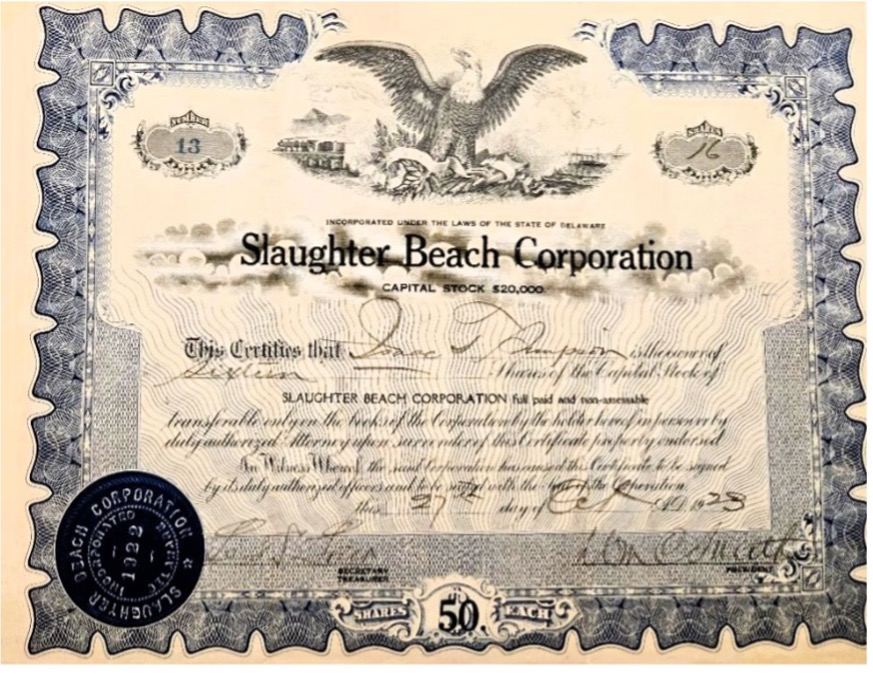
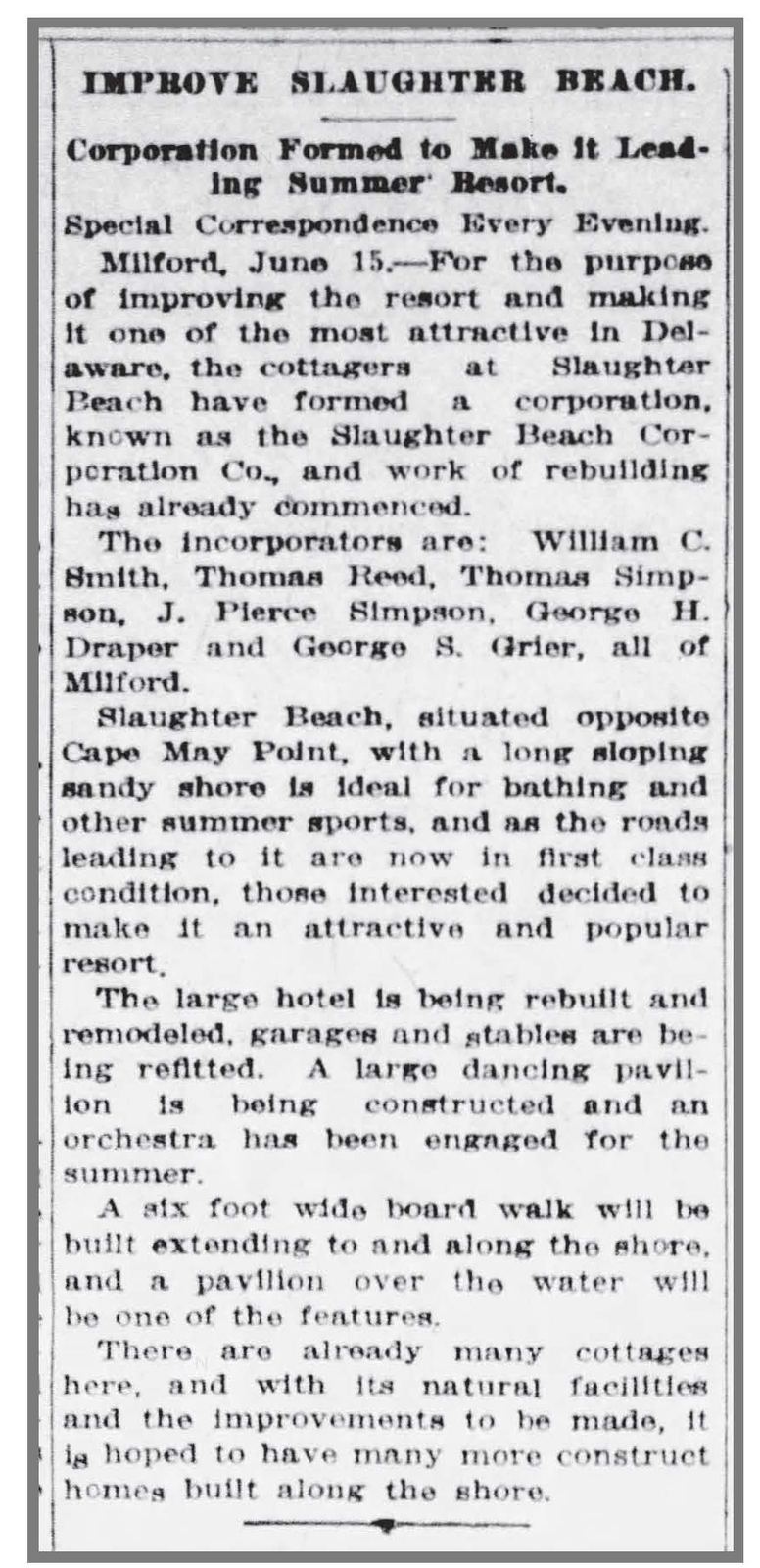
A certificate of incorporation was issued and a copy is shown above. The incorporation was announced in June 15, 1922, in newspaper articles to advertise the improvements of Slaughter Beach. There were two articles dated June 15, 1922, published in the Wilmington News Journal, announcing the Slaughter Beach Corporation and their plans and goals for the area. The Corporation was the basis of moving toward forming and incorporating the town of Slaughter Beach. The Slaughter Beach Hotel, built in 1865, and after a number of owners, was deeded to Thomas Simpson and his brother John Pierce Simpson in 1922. The brothers sold it to the Slaughter Beach Corporation, led by George T. Reed, George Grier, William Smith, and George H. Draper Jr. Part of the hotel complex was a large 2-story “dance hall”, pictured below.
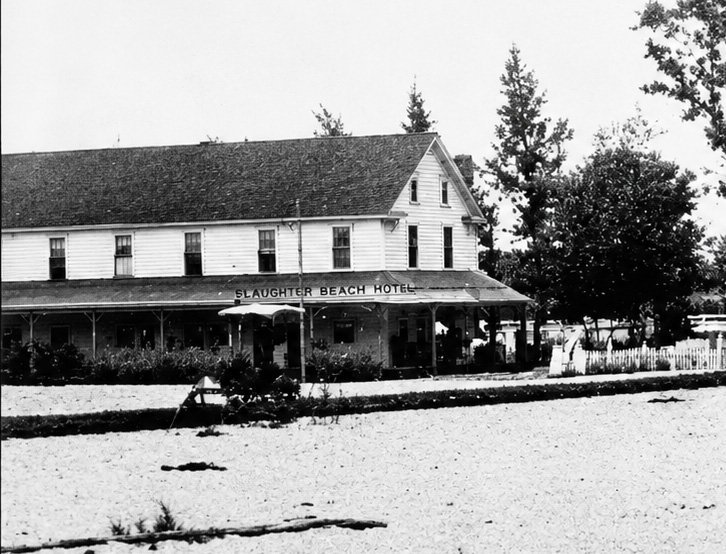
The Slaughter Beach Corporation purchased the local hotel on June 1, 1922, and the articles mention the existence of a large dance pavilion next to the hotel. It was during this time that the old 2-story dance hall was moved across the street to the bay side, and split into two cottages. Documentation provided by Dave Kenton states that the “old” dance hall was replaced by the “new” dance hall while the Slaughter Beach Corporation owned the hotel and the “center of the beach”. The center of the beach was the area around what is now the intersection of Slaughter Beach Road and Bay Avenue.
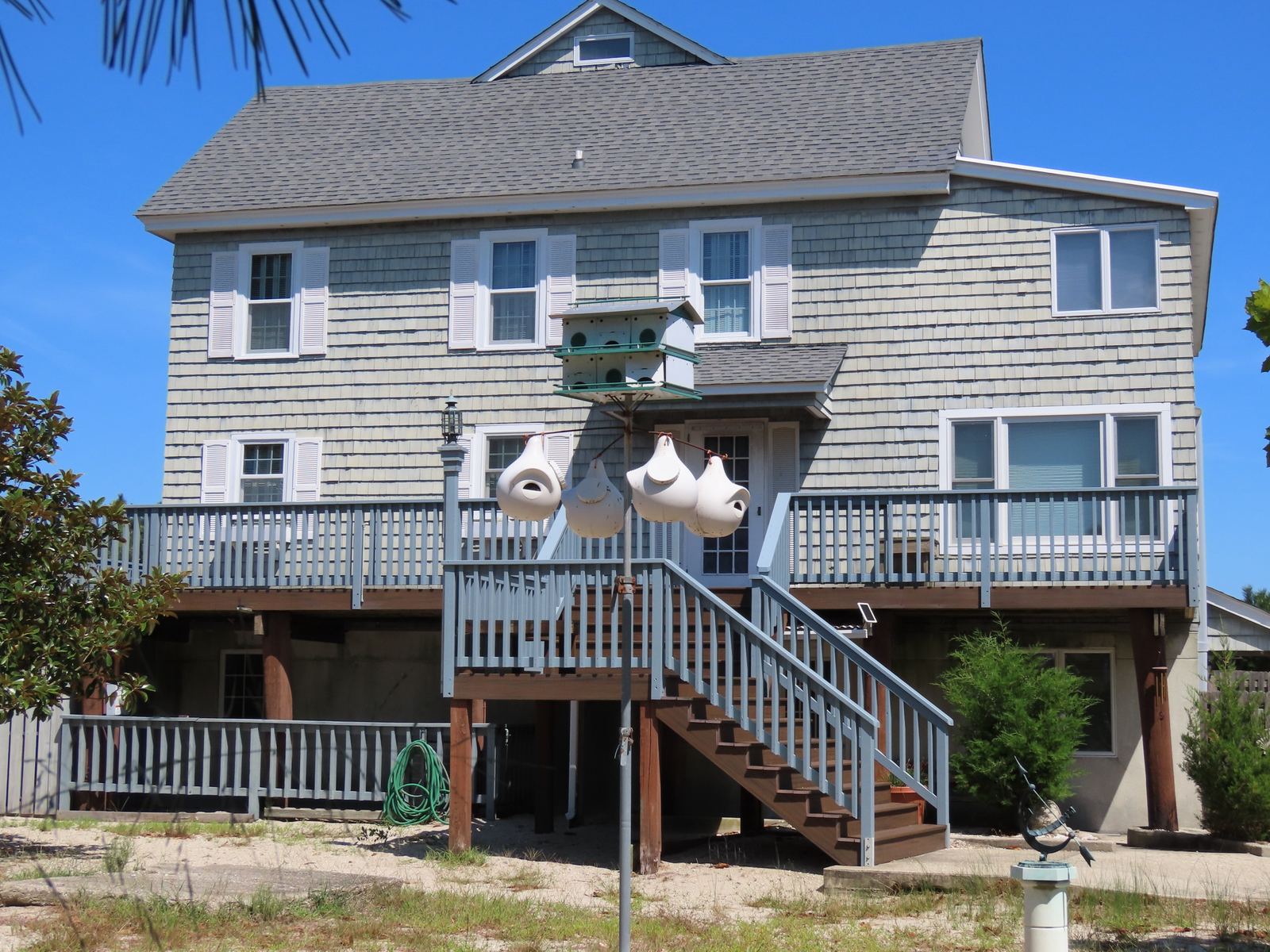
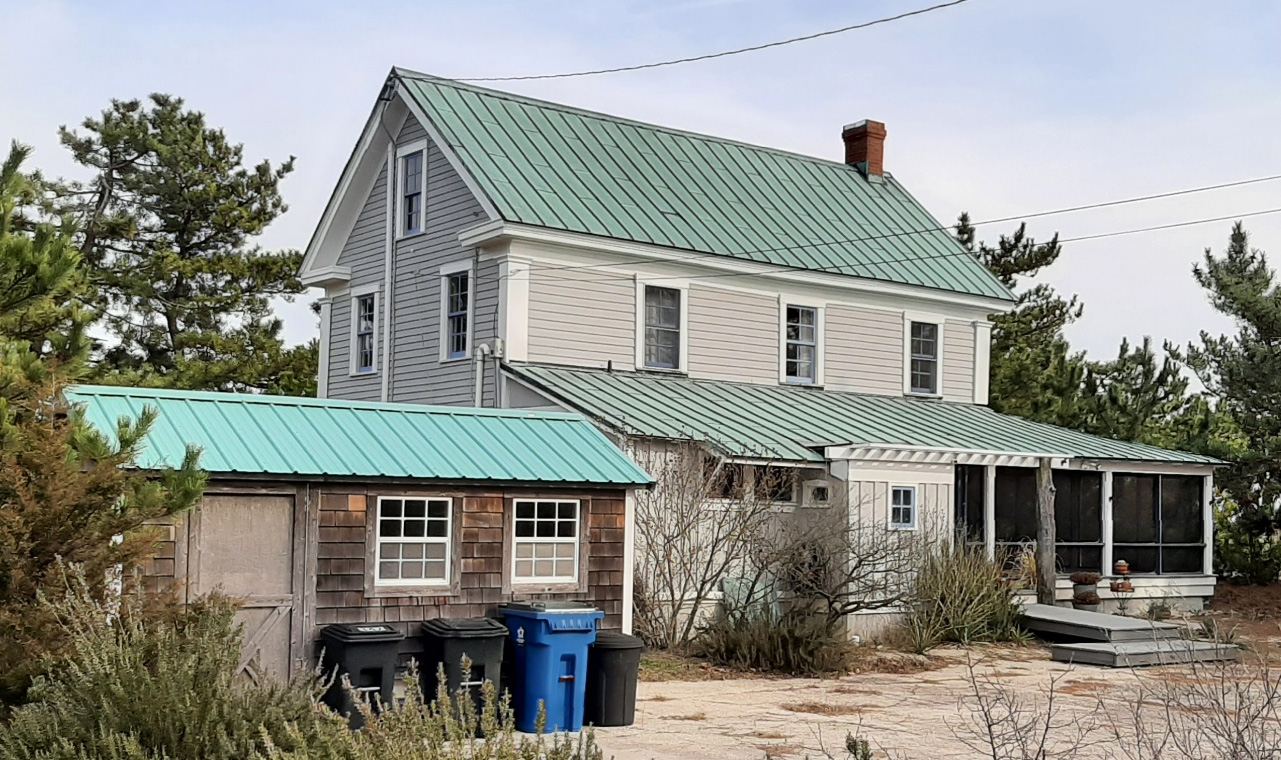
The Corporation wanted to improve the hotel and its amenities, install a pavilion, and coordinate the building of a boardwalk. The 2-story dance hall was split and moved across the road to what is now 349 Bay Avenue and 347 Bay Avenue. On the left above is the half that was originally moved to 349 Bay Avenue. Later in the 1980s, it was moved to the next lot north to 351 Bay Avenue, elevated on pilons and had substantial remodeling done. Above on the right is the other half of the dance hall at 347 Bay Avenue, and to this day remains essentially as it did in 1922. Below on the lower left, is the “new” dance hall, erected around 1922, and was only one story.
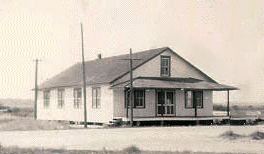
The Slaughter Beach Corporation added other infrastructure until the formation of the Town of Slaughter Beach took over the task of building a town beginning in 1931. Included in the first business of the new town was an order that all property owners were required to get their boardwalks in order by July 1, 1931, with the town agreeing to fill in the boardwalk between houses on streets owned by the town. Copies of the election and tax assessments were placed in public places, such as the (new) dance hall, Hitchen’s store, Mr. Pettyjohn’s store, and Mr. Pearce’s store. On July 12, 1932, George H. Draper Jr. was named the first official President, with that title later changed to Mayor. He continued to be active in Town activities and contribute to the town development in many aspects.
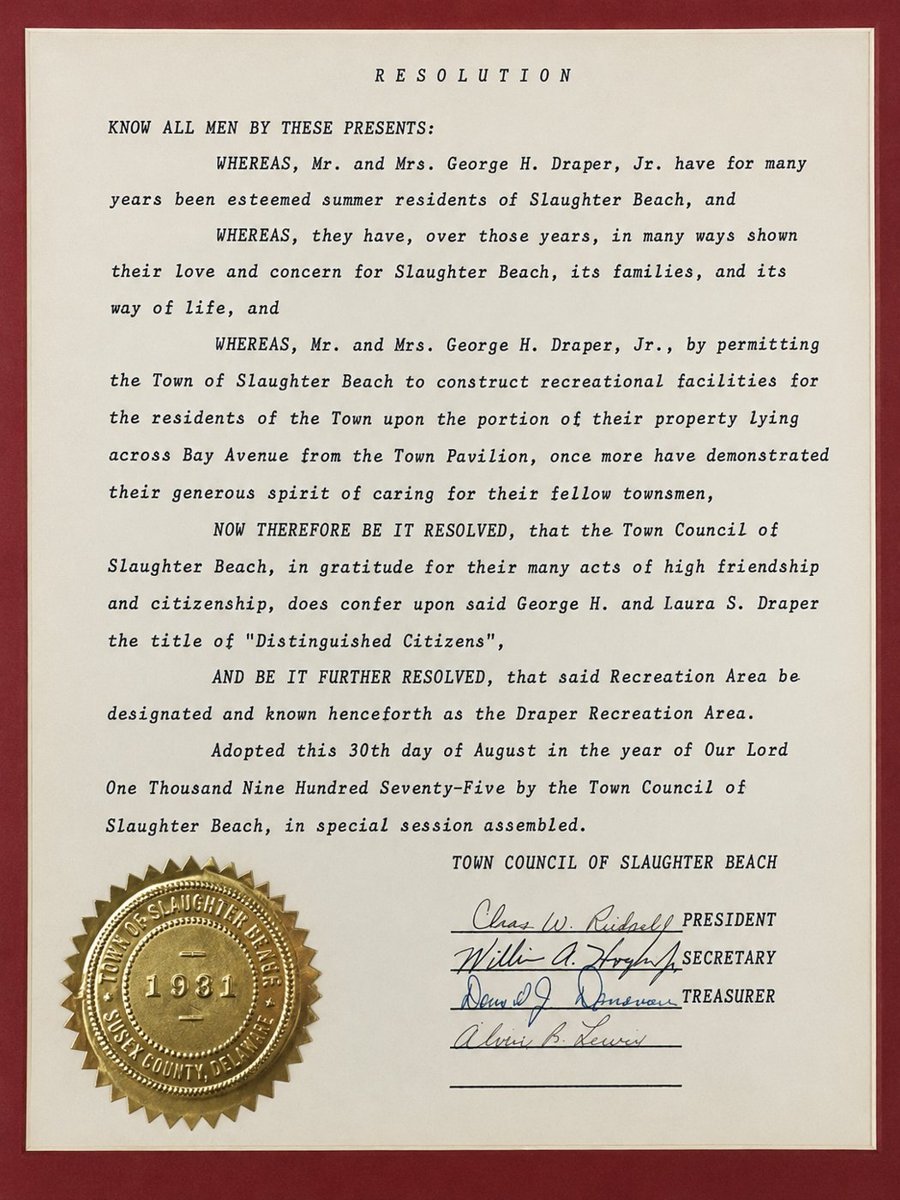
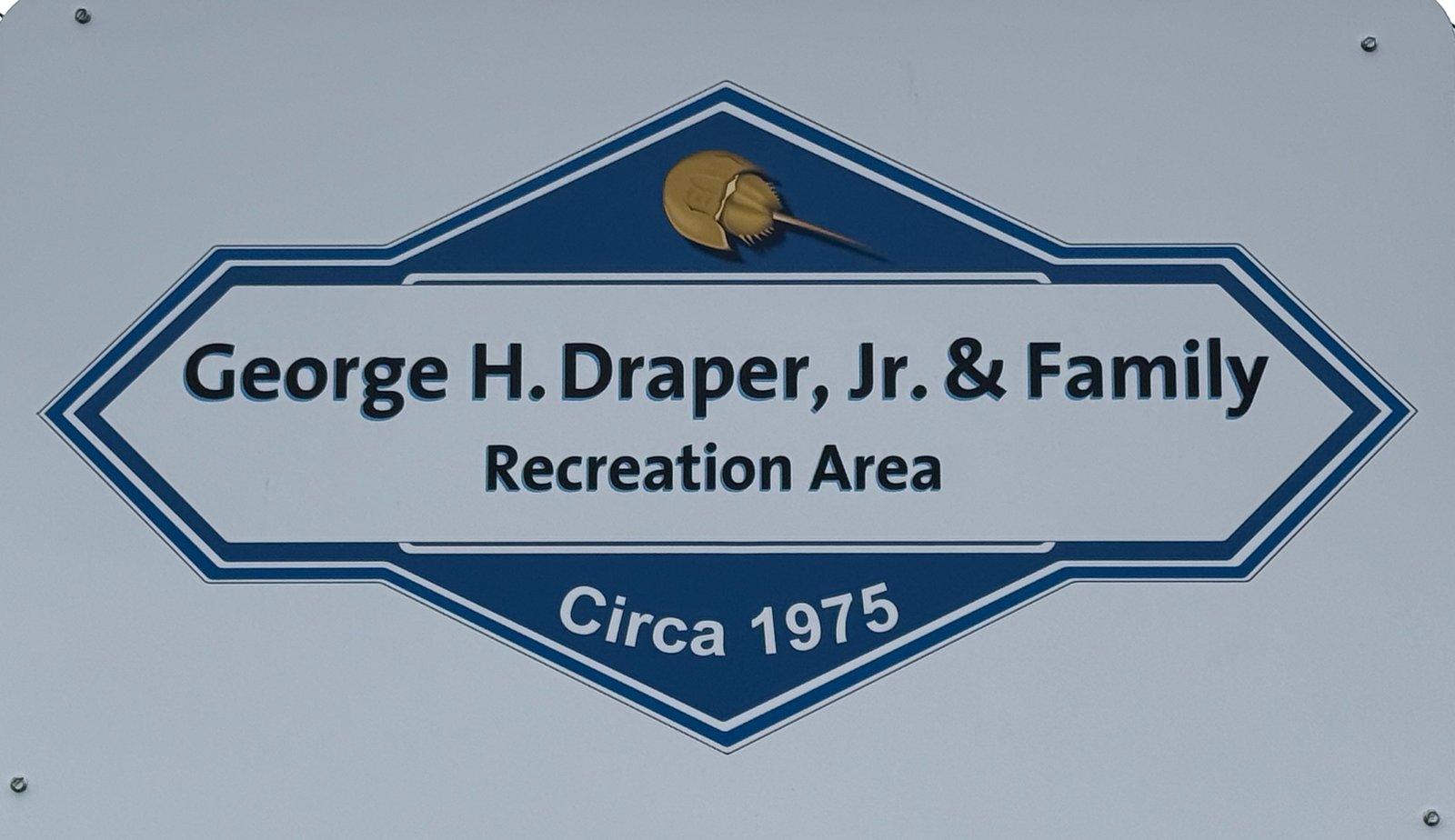
In 1975, the Town Council issued a resolution to honor Mr. and Mrs. George H. Draper, Jr. as “Distinguished Citizens” for their contributions to the development of the town. The 1975 document to the right is the original resolution certificate, copy courtesy of Laura Draper Carter. The following sign was erected in recognition of his donation to the town.
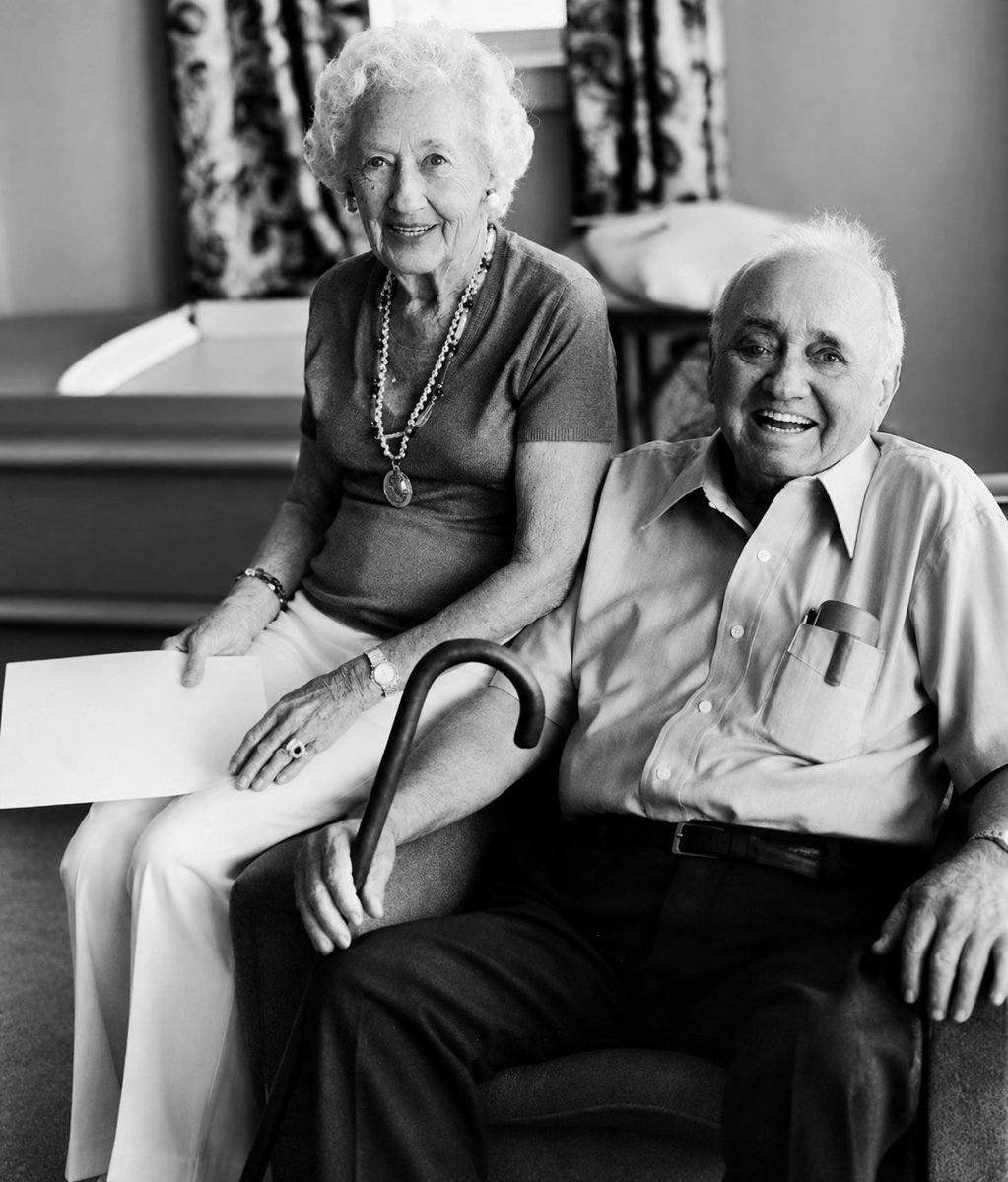
George also was a founder of the Slaughter Beach Water Company, founded in 1951. Prior to World War II, the company had 2 wells that served the residents of Slaughter Beach. A memo sent out to lot owners around 1958 indicated that there were no full-time residents at that time since the memo indicates that the service is available only from May 1 to October, then is disconnected for the winter. This was a major convenience since private wells were not permitted that close to the Bay. The first system was a windmill that pump water into a water tower. This was originally located next to the Slaughter Beach hotel, across from the fire hall. Below is a rare photograph of the windmill
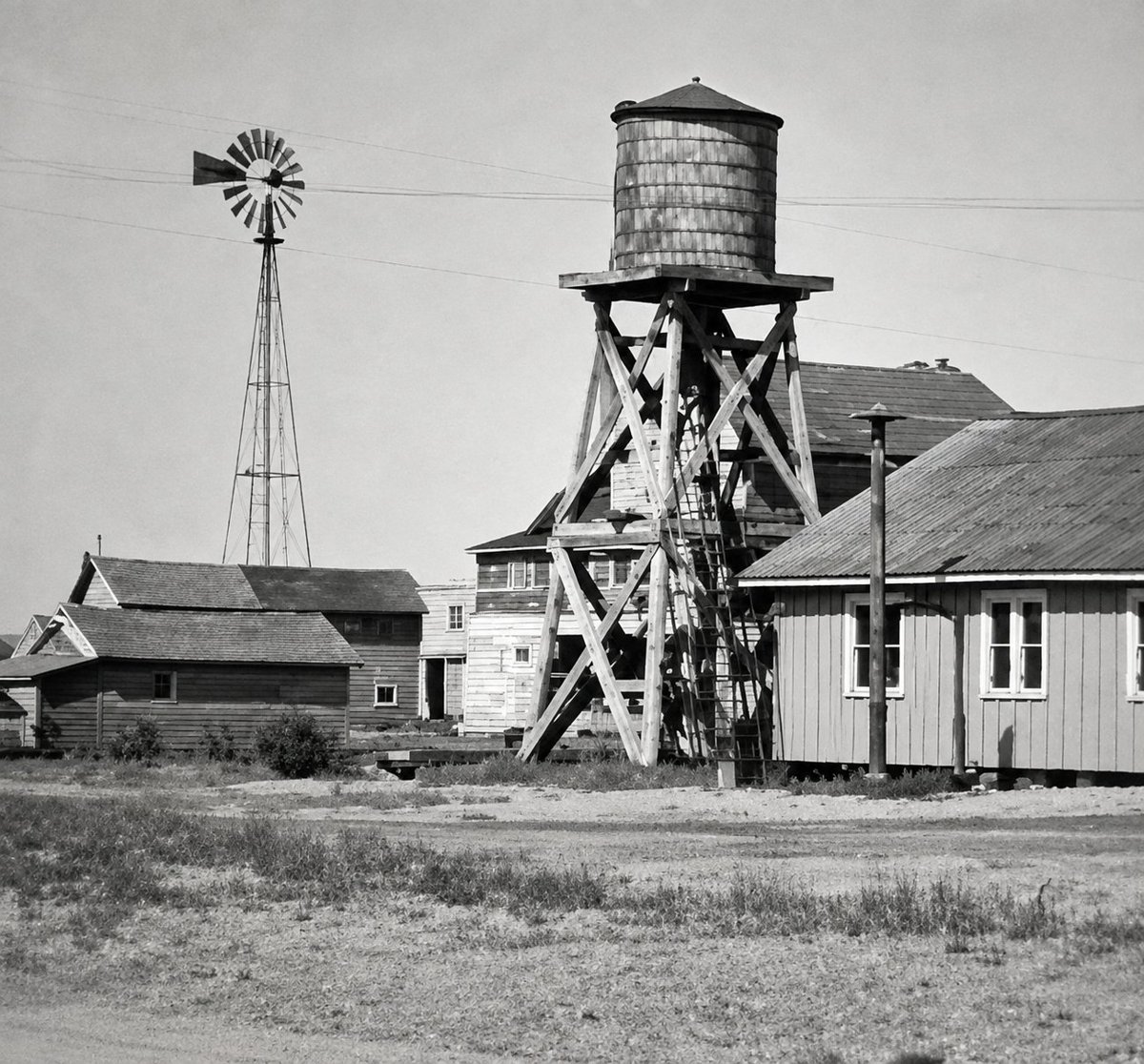
and water tower. The electricity for the pumps was paid directly to the Lincoln-Ellendale Electric Company. Typical rates were:
Tapping fee for new connections: $5.00
Charge for May 1-October 1: $15.00
Electric Fee: Divided equally between the houses connected to the service.
There was also a reconnect fee of $5.00 for frozen or leaking lines George was the original operator of the system and in 1973, he turned the operations over to his son, Frank S. Draper. The Artesian Water Company purchased the system in 2018, and has made several improvements since then.
Frank S. Draper (1939-2023) continued the family’s contributions to Slaughter Beach. He managed the SB Water Company from 1973 until it was sold in 2018. Frank added 2 more wells to the system, one at the south end of Bay Avenue and another at the north end, on Sandpiper Drive. Frank was involved with the family farms and canning business, and served as mayor of Slaughter Beach from 2004 to 2012. He was a graduate of the University of Delaware, and a member of the Delaware National Guard. Frank was extremely social and loved the community in which he lived. As a result, he volunteered and served the Greater Milford Community in a variety of leadership roles throughout his life including Milford School Board, Milford Trust Company Board of Directors, Mayor of Slaughter Beach, Mispillion Kennel Club Board of Directors, Milford Historical Society, and Founding Corporate Member of the Shawnee Country Club. His obituary suggested that donations be made to the Slaughter Beach Fire Company.
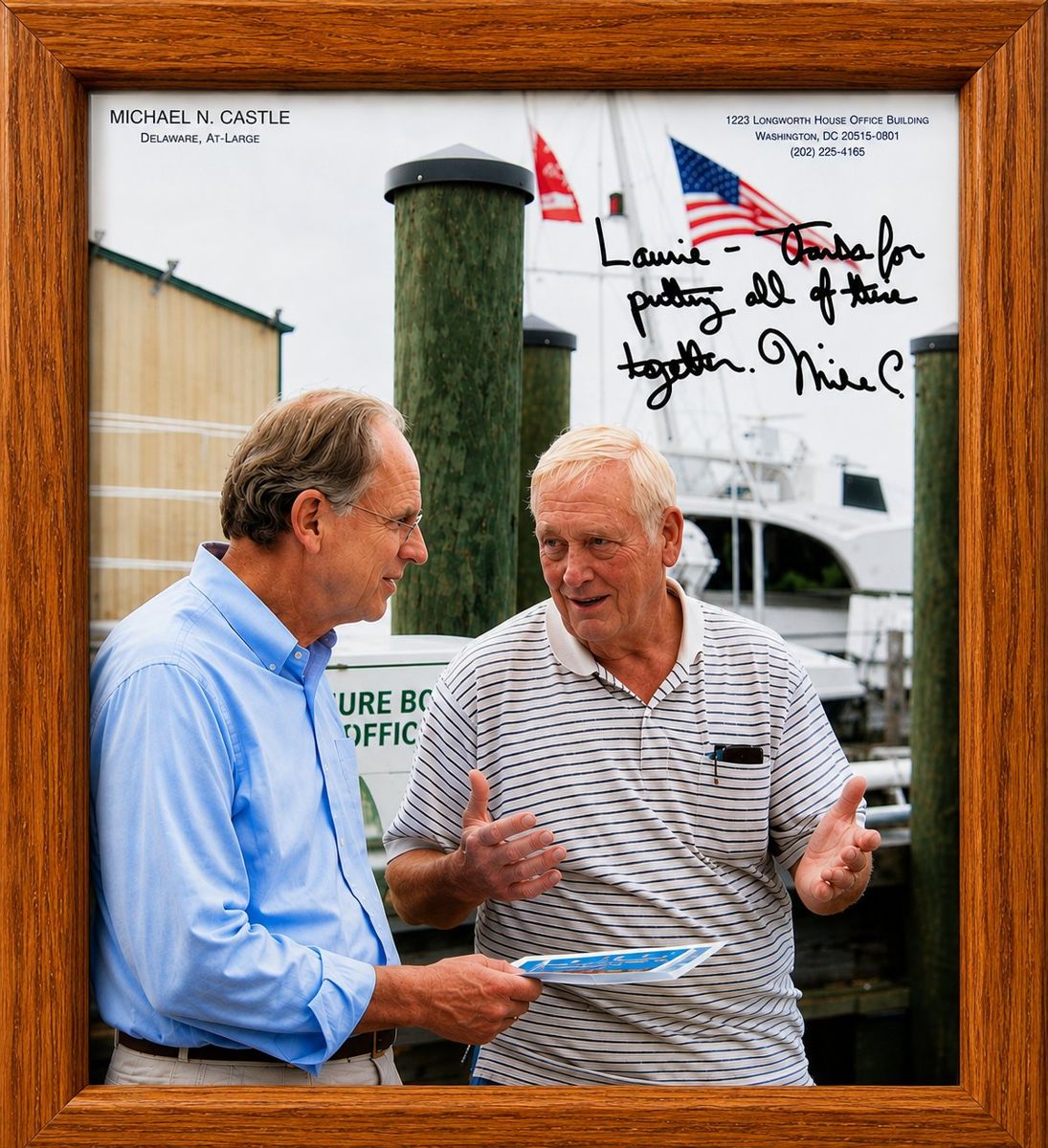

Thomas H. Draper (1941-2017) was a sixth great-grandson of Alexander Draper. A successful businessman, Tom founded WTHD radio in Milford, and Draper Media, and was the owner of WBOC and WRDE, but he never forgot his roots. Thomas Henry Draper was born and raised in Milford, Delaware, in 1941. His schooling took him to Brown University in Providence, R.I. There, he excelled on the lacrosse field and was the captain of the 1964 team, and named All-American that year as well. He eventually would end up in Brown University’s Athletic Hall of Fame. After graduating from college in 1967, Mr. Draper moved back home to Sussex County, Delaware, and in 1967 bought a radio station that became WTHD (his initials). Five years later Draper signed on WAFL-FM in Milford, Delaware. Draper’s broadcasting career would take a big turn in the late 1970s when WBOC-TV’s then-owner, the A.S. Abel Co., put the station up for sale. After extensive negotiations, Tom was able to purchase WBOC. He expanded the radio and TV stations and founded Draper Media to continue their growth.
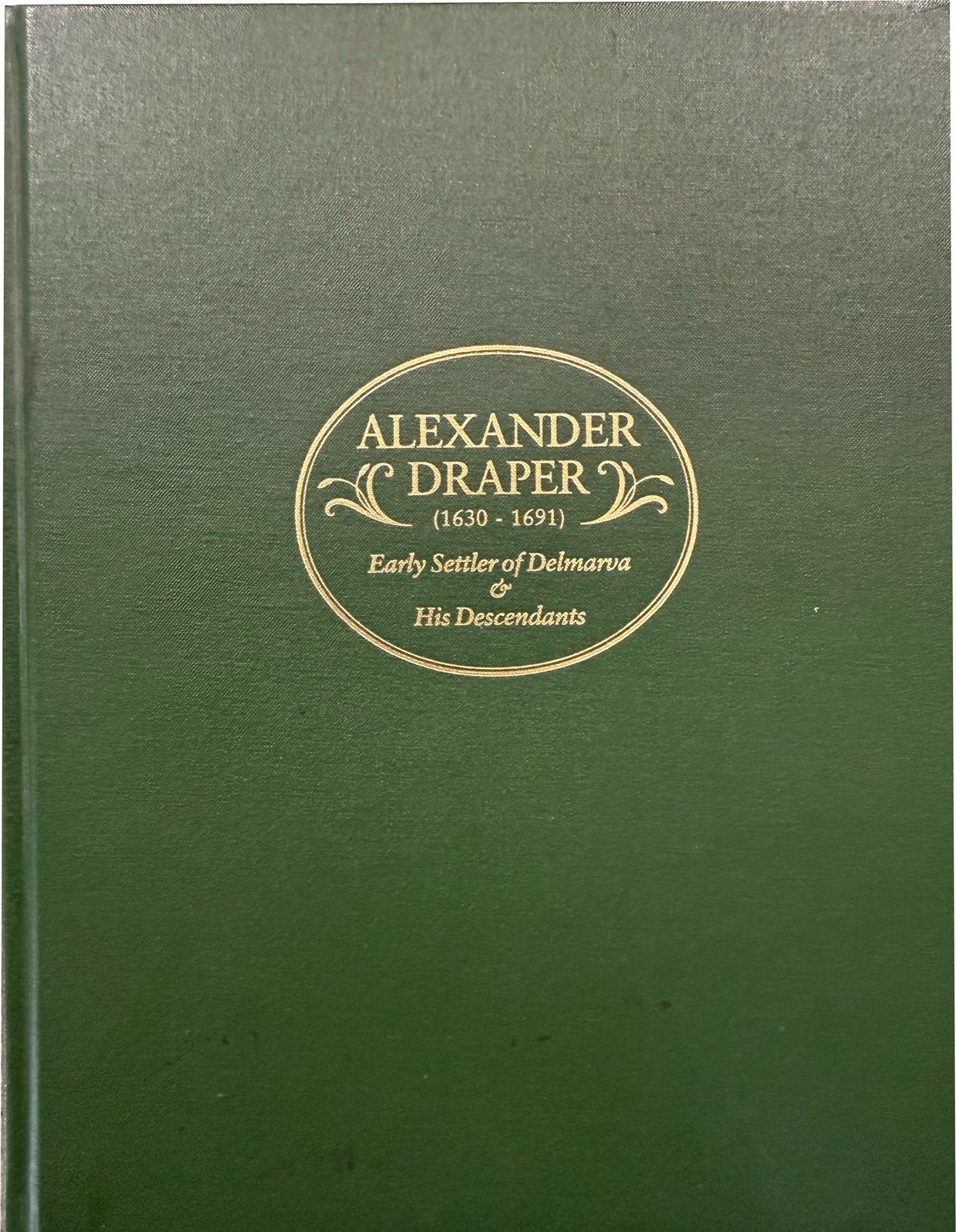
Tom Draper never forgot his roots. Tom and Joana Donovan wrote a book about Alexander Draper and his descendants that was published in 2002. It was a 266-page hardcover book, he and contributed greatly to the historical documentation of the Slaughter Beach area. He was frequently seen riding his bike to the beach along Slaughter Beach Road, going by farms his sixth great-grandfather had owned. Tom had asked the current owners of those farms that if they were ever to sell them, he would definitely be interested. He got his chance in 2010 with the 141 acre Simpson Farm when heirs of Charles E. Reed decided to sell it. Tragically, he was hit while riding his bike to the beach and died from his injuries. In a twist of fate, the area where he was hit was once part of his sixth great-grandfather’s holdings, and was across the road from the Simpson Farm that he had purchased.
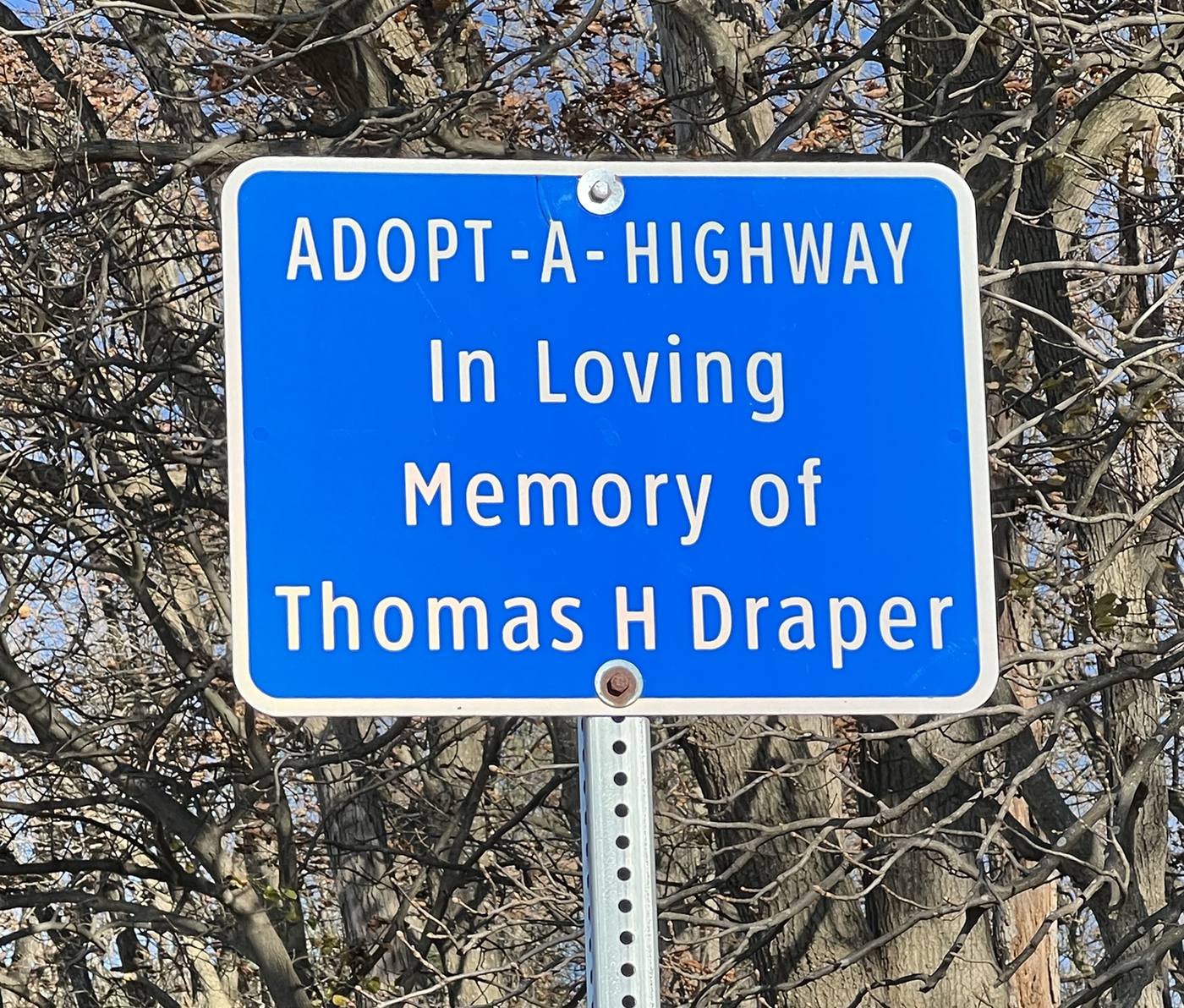
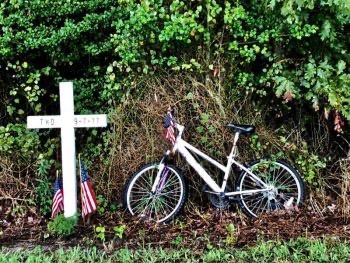
Above on the right is the memorial erected to Tom after the accident. It is on Slaughter Beach Road along a wooded area of the Campbell Farm, also once owned by Alexander Draper. The Adopt-A-Highway Memorial was added in November, 2018.
References and Acknowledgements
- Scharf, J. Thomas, 1888, History of Delaware, 1609-1888, Volume #1, by L. J. Richards & Company, Philadelphia
- Hill, J. Bennett, 1970, The Bennett Family of Sussex County, Delaware, 1680-1860, with Branches into the Warren, Shockley, and Other Families, Milford Chronicle Publishing Company
- Draper, Thomas H., Donovan, Joana, 2002, Alexander Draper (1630-1691) Early Settler of Delmarva and His Descendants, Gateway Press, Baltimore
- Turner, C.H.B. 1909, Some Records of Sussex County Delaware, Allen, Lane, & Scott, Philadelphia
- Deeds, maps, documents, and photos from the Reed and Bennett families
- Historical articles and photos by Dave Kenton
- Ancestry.com: Delaware Land Records 1677-1945